
The Japanese triple tragedy earthquake, tsunami and the very dangerous situation in the nuclear power plants has also brought into sharp focus how the effectiveness of complex supply chains, which are at the heart of globalisation of output, is crippled if there is a crisis in a large manufacturing or high-technology economy.
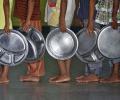
After decades of decline, the global prevalence of undernourishment is increasing.

'The structural story of India is a multi-decadal story.' 'One should stay invested in that story and avoid reacting to what is happening globally.'

Withdrawing a blanket ban on overseas shipments of non-basmati white rice, the government on Saturday imposed a floor price of $490 per tonne and exempted the commodity from export duty. Exports of non-basmati white rice have been banned since July 20, 2023 to boost domestic supply. "The export policy for non-basmati white rice (semi-milled or wholly milled rice, whether or not polished or gazed) ...is amended from prohibited to free, subject to MEP (minimum export price) of $490 per tonne with immediate effect and until further orders," the directorate general of foreign trade (DGFT) said in a notification.

The oil industry experienced three upheavals between 1973 and 1991, which seem to be etched in the memory of the industry's decision makers. Naturally, at the sign of a new crisis, the decision makers like to dip into those tumultuous decades to find ways to deal with the new shock, in addition, of course, to expert reports and forecasts. So, the industry bigwigs turned the pages of history to get a peek into the future of oil price movements after Russia invaded Ukraine in 2022, Israel attacked Gaza in 2023, Iran-linked Houthi rebels pounded tankers crossing the Red Sea in support of Palestine the same year, and Iran rained missiles on Israel in 2024.

Modi, who is visiting Ukraine at the invitation of President Volodymyr Zelenskyy, has said that he will share with the Ukrainian leader perspectives on peaceful resolution of the ongoing conflict.

Prime Minister Narendra Modi Wednesday said the International Monetary Fund (IMF) sees India as a "bright spot" in the global economy and as per the World Bank, India is in a better position to deal with the global headwinds than many other countries. This is because of India's strong "macroeconomic fundamentals", Modi said while virtually addressing the inaugural function of the 7th edition of Invest Madhya Pradesh-Global Investors Summit in Indore. In the past eight years, the government has increased the speed of reforms and removed many hurdles in the way of investments.

The G7 summit, to be held in the luxury resort of Borgo Egnazia in Italy's Apulia region from June 13 to 15, is likely to be dominated by the raging war in Ukraine and the conflict in Gaza.
Prime Minister Manmohan Singh on Saturday sought to highlight his government's accomplishments at the meeting of the Planning Commission in New Delhi.
If economic pundits and analysts are to believe, India's growth story presents a rosy picture and it is destined to be a significant economic power soon.

The cost of living crisis is the biggest short-term risk the world is facing, while the failure of climate mitigation and climate adaptation is the largest long-term concern, the World Economic Forum said on Wednesday. Releasing its annual Global Risks report in London ahead of its Davos summit next week, the WEF also said geopolitical rivalries and inward-looking stances will heighten economic constraints and further exacerbate both short- and long-term risks. The Global Risks 2023 report, drawing on views of over 1,200 experts, policy-makers and industry leaders from across the world, also urged countries to work together to avoid 'resource rivalries'.

Lavrov also noted that the G20 Summit in New Delhi provided a direction towards fairness in global governance and global finance as well.

Modi said New Delhi has emphasised on dialogue and diplomacy along with restraint to deal with the situation arising out of the Hamas-Israel conflict.

In retrospect, it appeared that the bitterness of the war was still strong and the Ukrainian success in occupying Russian territory just a few days ago had added to the complexity of the situation. The positive US response to the visit, however, remains a silver lining in the dark clouds, notes Ambassador T P Sreenivasan.
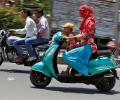
Two-wheeler exports from India have decreased by 20 per cent year-on-year (Y-o-Y) to 1.69 million units in the first half (H1) of 2023-24 (FY24) due to a challenging geopolitical situation and foreign exchange (forex) crises in key markets such as South Asia, industry body Society of Indian Automobile Manufacturers (Siam) said on Monday. On the other hand, passenger vehicle (PV) exports in H1FY24 increased by 5 per cent to 336,754 units because the key markets are much more diversified worldwide, Vinod Aggarwal, president, Siam, told reporters during a press conference. The Russia-Ukraine war, which started in February 2022, has brought significant instability to global fuel prices.

The crises of the 21st century, 9/11, the economic meltdown, COVID-19, Russia-Iran war and the Hamas-Israel war seem to be never ending. In this situation, Iran might be contemplating a nuclear deterrent to defend itself, observes Ambassador T P Sreenivasan, the distinguished long-time Rediff contributor who turns 80 on June 17..

Top government officials in New Delhi have started discussions with stakeholders ranging from shipping and container companies to export promotion councils to understand the impact of the Iran-Israel tensions and plan ahead. Inter-ministerial talks are also being lined up amid the crisis situation in West Asia, sources confirmed. While the crude flows are not directly under any threat, elevated oil prices remain a concern, according to officials.
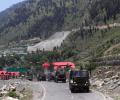
We have a full blown epidemic, an economic recession with the highest unemployment in Indian history, and a powerful enemy whose aggressive and offensive actions we did not anticipate, states Aakar Patel.
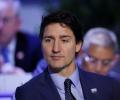
Canadian Prime Minister Justin Trudeau highlighted the importance of coordinated G20 leadership and action to uphold the rule of law and international law and strengthen democratic systems, as he participated in a virtual G20 Leaders' Summit hosted by India.

India has emerged as a 'major power' by achieving outstanding results in economic development and social governance and its transformation as a stronger, assertive country has made it a 'new geopolitical factor', according to a commentary by a Chinese scholar in a state-run newspaper in Beijing.

This may be in line with Russia's private military company, Wagner Group, which was controlled until 2023 by Yevgeny Prigozhin, a former close ally of Russia's president Vladimir Putin. The group used the infrastructure of the Russian Armed Forces.
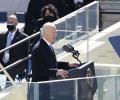
Biden said that the US will be part of WHO's fight against the coronavirus.

The first summit in South Asia, it will host the largest delegation of 43 heads of State and government as well as the heads of international organisations.

Happily, it does not require the world to hold a mirror up for us. We can look at ourselves and understand easily if we choose to be honest about where we find ourselves three quarters of a century after Independence, asserts Aakar Patel.
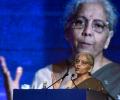
'The global situation is not very good.'

The tourism industry expects a short-term impact, as it is counting on the state's proven expertise in managing such crises.

Human Development -- a measure of a nation's health, education, and average income -- has declined for two years in a row.
Entrusted with the responsibility of tightening regulation and supervision in global banks that suffered huge losses - now estimated at over $1 trillion -- during the last one year, the Basel Committee on Banking Supervision has embarked on a series of measures to ensure proper regulation within banks. It has suggested forward-looking risk assessment by banks to avoid financial crises in future.

Emphasising the importance of sustaining food and energy security, the G20 leaders called for the "cessation of military destruction or other attacks on relevant infrastructure".

We have the workforce, now we need to ensure that we take full advantage of game-changing technologies and geopolitical openings, suggests Jayant Sinha, chairman, Parliament's Standing Committee on Finance.
India needs to play a more constructive role in global economy, particularly in matters like international trade and capital flows, government said on Thursday.

In this round, the market has won. But it is still for Gautam Adani to decide whether he has lost or not, argues Shekhar Gupta.
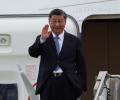
As United States President Joe Biden prepares for a rare summit with Chinese President Xi Jinping, the ongoing wars in Ukraine and between Israel and Hamas set the stage for high-stakes discussions, CNN reported on Tuesday.
Growth in India is expected to slow to 6.3 per cent in FY 2023/24 (April-March), a 0.3 percentage point downward revision from January, the World Bank said Tuesday but noted there is an unexpected resilience in private consumption and investment and robust growth in the services. The World Bank made these points in its latest edition of Global Economic Prospects according to which global growth is projected to decelerate from 3.1 per cent in 2022 to 2.1 per cent in 2023. In Emerging Markets and Developing Economies (EMDEs) other than China, growth is set to slow to 2.9 per cent this year from 4.1 per cent last year. These forecasts reflect broad-based downgrades.

'Silicon Valley people are generally used to layoffs.' 'Every person who has been in the industry for 15-20 years would have been laid off at least 3-4 times.' 'In India, we aren't used to that concept.' 'So when it came here, people were shocked.'

The latest diplomatic row between India and Canada will not impact bilateral military engagement and the Canadian Army will take part in the conclave of the Indo-Pacific army chiefs in Delhi next week, a senior Indian Army official said on Wednesday.
'She delivers on promises, especially on security issues which is a core concern for India.'

On Pakistan, the publication quoted him as saying that India wants "normal and neighborly relations."
Emerging markets and Asia may be first in the firing line
